Stoppt die Vorratsdatenspeicherung! Jetzt klicken & handeln!Willst du auch bei der Aktion teilnehmen? Hier findest du alle relevanten Infos und Materialien:

Monday, September 11, 2006

"Crime as a political problem"...

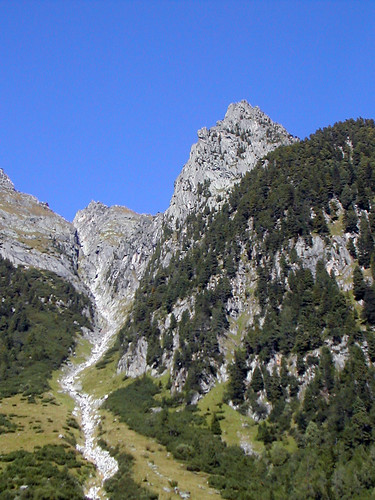
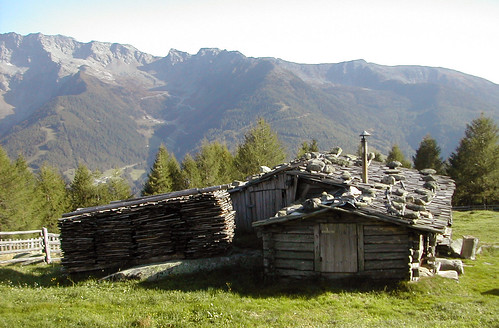
...that was the topic of my at the summer school of the German National Academic Foundation at beautiful St. Johann in South Tyrol. I don't have much time to report on all the cool things we did there but for now I wanted to post some of the pics I've shot. If you want to see more check my flickr-set.

Trippachtal
Trippachtal
Holzeralm
below the Holzeralm, Klausberg area in the background
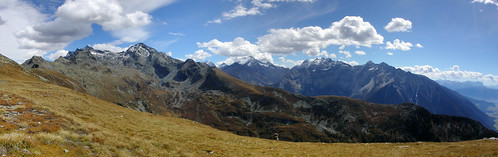
Steinerholm Panorama
panorama from the Steinerholm ridge

Tuesday, July 18, 2006

Documenting vs experiencing

Spiegel Online features an article (German only) about yesterday's Non Photography Day. On their website the people behind it (according to Spiegel Online the photographer Becca Bland) explain the idea behind the day:

Non- photography day is an effort on my part to revive the moment by putting down the camera. It is a day to think about how life exists, in essence and not appearance and to understand the inadequacy of the photograph in describing this essence, to bring awareness of the perils of living through the view finder or the display screen…
Some thoughts about the issue: I have often thought about how seeing the world as a photographer changes your perception and your experience. I think it is important to keep these two levels apart: with respect to perception I see photography as a way to enhance the ways you see your environment. To have the photographic awareness, as it were, makes you turn your head around, not just look straight, it motivates you to look behind the corner, open that door, lie on the floor, walk behind the waterfall, or take the stairs instead of the elevator.

On the level of experience I somehow agree with Bland's criticism (though not with her essentialist, romanticist vernacular). The influence of taking photos usually becomes most apparent to me when I go to protests (or read about protests on indymedia) or on concerts. With the former you often get the impression that there are more people shooting pictures than people interested in the original purpose of the protest. While it is important to document police violence and to publish pictures of a rally that otherwise might not get any media attention, I often have the impression that "documenting" becomes an end in itself. And seeing yourself as the "documentalist" distances you from the protest and its aims.

On concerts -- usually hardcore shows in my case -- it seems similar. The tradition of documenting itself seems to be very widespread among subcultures. You have fanzines, people with large collections of video and audio bootlegs, and nowadays websites with often hundreds of pictures. Again: this is great and useful -- just consider what the great documentary about the rise of modern skateboarding in the 70s, Dogtown and Z-Boys. The plethora of Super-8 and other video material that they have been able to use is amazing and I suppose it had been mostly shot by the actors themselves. But when you try and be in the role of the person behind the photo or video camera or at the audio recorder yourself you quickly realize what a different experience it is than if you were in the moshpit: you have to protect your camera, you can't dance, band and audience become an object apart from you. This last point, in my opinion, points at something that the initiators of the Non-Photo-Day have failed to consider: not only is it the photographer on whom seeing herself in this role might have problematic aspects but also the objects of photography might influenced in ways that are not desirable. The awareness that you are being filmed, that pictures of you will soon be available to anyone on the internet certainly influences both your experience and behavior. In what direction is an open question -- maybe you want to be the "hero" of the documentary and burn that flag, make that audacious dance move that you practiced in front of the mirror, or be a first-time stagediver. But maybe you'll become inhibited, self-conscious, avoiding anything that might make you the center of attention of all those cam people.

So, my dear photographers: Continue to take your pics, on July 17 and the rest of the year! But think about what having a camera between you and others does to you and does to others. And know when it is time to put away the cam and jump off the stage, protect your fellow protesters, or just enjoy a marvelous scenery.

Monday, July 03, 2006

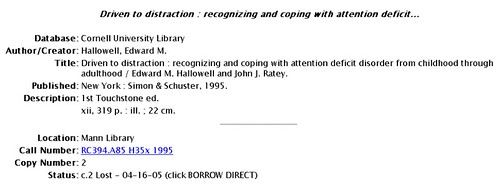
Irony

Irony
As seen in the Cornell Library catalogue :-)

Wednesday, June 28, 2006

Running is bad for your health!?

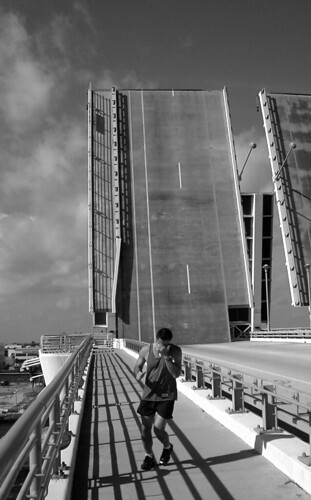
I'm terribly bored because I have a stretched ligament from running which largely prevents me from leaving the house. The positive side-effect is that I get to process some of my older pictures. I've even found one thematically related to my injury, taken at Fort Lauderdale in December 2005.
Run!

Friday, June 23, 2006

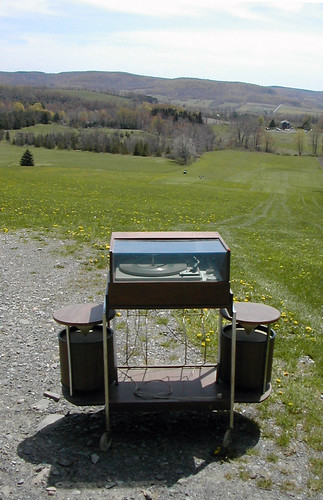
The Sound of Nature

One of my alter egos has pointed out that 1) I haven't updated the air pumps in a while and 2) there are decidedly too few pictures in here.

Voilá! Here is both a new post and a nice (at least in my opinion) picture:

The Sound of Nature

Shot on the way to the end-of-term BBQ at Katie's and Dave's place.

Friday, June 09, 2006

Die Eröffnung

Um meiner Funktion als WM-2006-Blog etwas mehr gerecht zu werden, gibt es hier nun einen Beitrag zur Eröffnungsfeier. Die ARD hat freundlicherweise die genaue Planung dieser online verfügbar gemacht, aber leider einen wichtigen Akteur vergessen -- mich. Nicht so schlimm, das kann ich ja an dieser Stelle einfach beheben:

16.30 Uhr: Die "jungen Riederinger Musikanten" ziehen auf einem prächtig
geschmückten Wagen ein, Heuhaufen werden auf das Spielfeld gerollt. 150
Schuhplattler betreten das Stadion. Von beiden Seiten laufen kräftige
Gestalten mit großen Schellen ein.

16.31 Uhr: Harald windet sich in heftigen Spasmen vor dem Fernseher, da
er aus Versehen von Angler-TV auf die WM-Eröffnung umgeschaltet hat.
Verzweifelt versucht er, die Fernbedienung zu erreichen, aber bei jedem
neuen Auftritt einer Trachten- oder HipHop-Gruppe verkrampft er erneut.

16.32 Uhr: Die Schellenführer beginnen mit ihrem ohrenbetäubenden
Vortrag. Nebelschwaden steigen auf, und der Musikantenwagen verwandelt
sich in eine Bühne.

16.33 Uhr: Harald ruft verzweifelt um Hilfe, aber seine Schreie werden
vom Krach der Schellenführer übertönt.

16.51 Uhr: Herbert Grönemeyer singt die offizielle FIFA-Hymne "Zeit,
dass sich was dreht" auf Deutsch und Englisch. Zum Ende des
Grönemeyer-Songs öffnen sich unter den Röcken der Frauen, die immer noch
hoch über der Fläche schweben, verborgene Taschen und es ergießt sich
ein Konfetti-Regen. Von den Seiten kommen Flaggenträger, die die 32
Flaggen der teilnehmenden Nationen tragen.

16.52 Uhr: Die Lage von Harald hat sich immer noch nicht gebessert. Die
unzähligen Nationalflaggen brennen sich unerbittlich auf seiner Netzhaut
ein. Er verspürt den unbändigen Drang, die deutsche Nationalhymne zu
singen -- nein: schreien!, aber ihm fallen immer nur die Worte
"Deutschland, Deutschland über alles" ein.

16.55 Uhr: Der Auszug der Musiker beginnt. Bühne und Teppich werden
abgebaut.

16.56 Uhr: Die Krämpfe lassen langsam nach. Harald erreicht endlich die
Fernbedienung und kann wieder zu Rotbarschen, Fliegenfischen und den
schönsten Angelspots der Welt umschalten.


Danke an Cordula für den Hinweis.

Monday, May 22, 2006

Video: Michel Foucault's Legacy

I just received a message that the Pacific Centre for Technology and Culture (PACTAC) has made available videos from their conference on Foucault's legacy. Speaker and topics are:


  • James Tully: Foucault and the Question of Agency

  • Arthur Kroker: Before Foucault: Power and Cynical Ideology

  • Warren Magnusson: Before Foucault: Scepticism, Relativism and Modernity

  • Rob Walker: Foucault, Self-Determination, Limits
You can find some other interesting lectures on their site, too.